
Cart (0)
Your basket is currently empty.
Live chat and helpline open between 7:00am – 5:00pm

Live chat and helpline open between 7:00am – 5:00pm
On all products ordered before 3:00pm

On all orders over £100

Find out what our customers are saying

No Quibble returns up to 14 days from purchase

If you’re preparing to tile a bathroom, kitchen, or splashback, your choice of surface matters more than you think. Use the wrong substrate and you risk water damage, tile movement, or complete adhesive failure.
One of the most common questions we hear:
Should I use plasterboard or a tile backer board?
This guide breaks down the key differences and helps you choose the best option for your project.
| Feature | Plasterboard | Tile Backer Board (Beava) |
|---|---|---|
| Water Resistance | Poor | Excellent (fully waterproof) |
| Tile Adhesion | Fair (needs priming) | Excellent (strong, rigid) |
| Suitable for Wet Rooms | Not recommended | Fully suitable |
| Durability | Brittle when wet | Strong & stable |
| Fire Resistance | Moderate | High |
| Insulation Properties | Low | Good (thermal + acoustic) |
| Installation | Can sag or crumble | Lightweight & easy to fix |
| Cost | Cheaper short term | Better long-term value |

Plasterboard (aka drywall or gypsum board) is made from a gypsum core between two sheets of paper. It’s widely used for wall and ceiling construction in the UK and is often already installed in many homes.
While it’s cheap and easy to work with, it’s not designed for direct tiling in wet environments.
You can tile onto moisture-resistant (green) plasterboard, but it needs priming and careful prep. Even then, it won’t survive long-term water exposure.

Tile backer boards are purpose-made boards designed to go behind tiles. They're built to stay rigid, waterproof, and stable even in the most demanding wet environments.
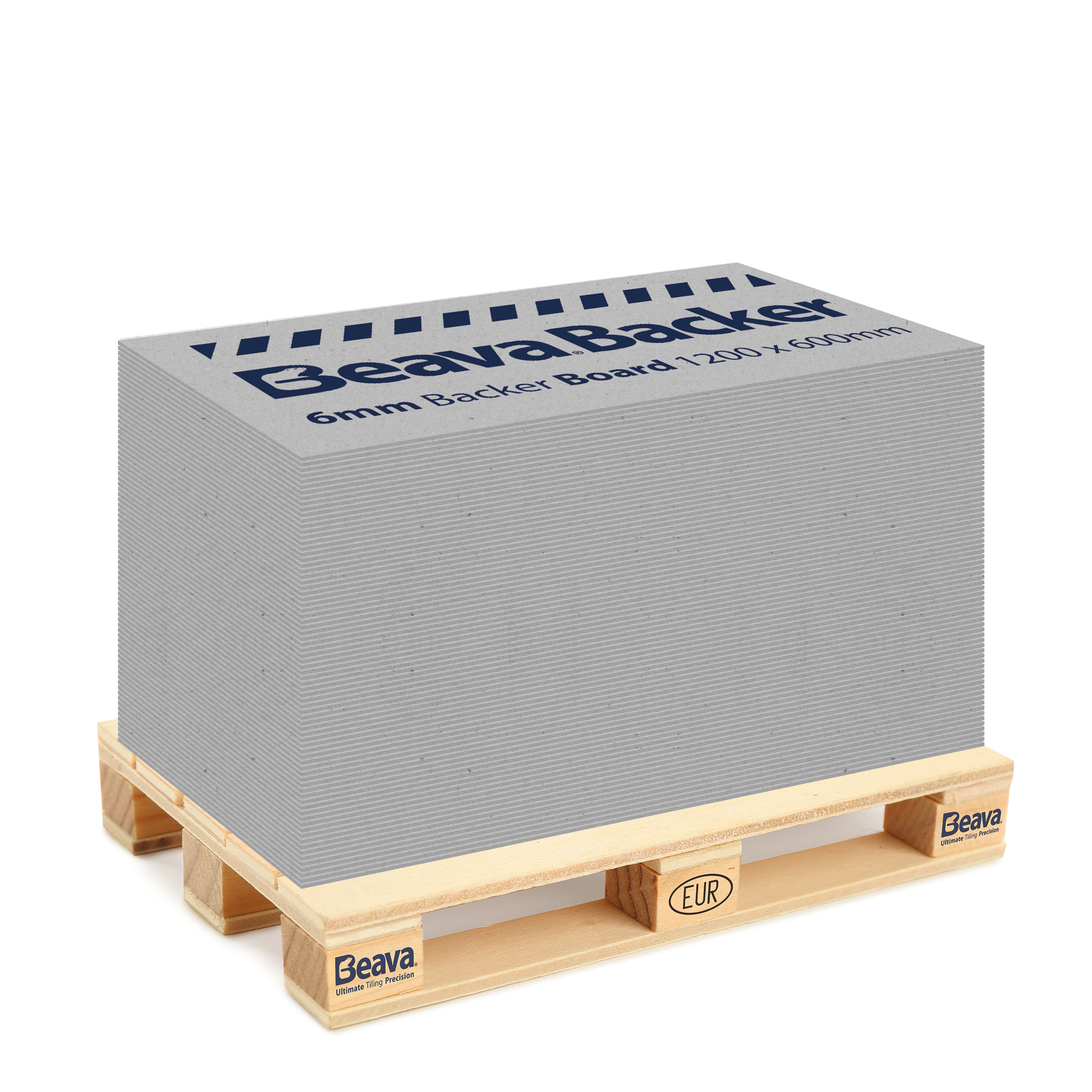
Beava Backer Boards are made from high-density foam with a cementitious coating. This gives them a perfect tiling surface, plus additional thermal insulation.
They come in two main sizes:
Beava Backer Board 6 mm – ideal for walls or overboarding stable timber floors
Beava Backer Board 12 mm – perfect for wet rooms, uneven substrates, or load-bearing areas
Plasterboard: Absorbs water like a sponge.
Backer Board: 100% waterproof. Ideal for wet rooms, showers, and behind baths.
Backer boards protect your tiles and prevent long-term moisture problems like mould and rot.
Plasterboard: Soft surface and can degrade over time.
Backer Board: Strong, rigid, and holds adhesive like a pro.
This means fewer popped tiles and better long-term hold.
Beava backer boards also offer better thermal resistance, which is perfect when used with underfloor heating systems.
They also help with soundproofing, particularly in bathrooms.
Backer boards are engineered to last as long as the tiles themselves. Once tiled, they won’t sag, warp or fail - unlike plasterboard in humid conditions.
Plasterboard is cheaper per sheet, but consider the extras:
Primers
Waterproofing
Risk of failure
Backer boards are a one-and-done solution. They save time, reduce prep, and last longer.
You can tile onto moisture-resistant plasterboard if:
It’s in a dry zone (e.g. above a sink splashback)
You prime it properly
The area isn’t exposed to regular steam or water spray
However, we don’t recommend plasterboard in bathrooms or wet rooms. Ever.
If you're tiling a bathroom, wet room, or kitchen splashback — go with a backer board. It’s a safer, longer-lasting, and more professional solution.
Beava Backer Boards are lightweight, waterproof, and built for purpose.
They're available in 6mm and 12mm, with fast UK delivery and trusted reviews.